This afternoon we took the line 10 metro out to the end of the line to visit the

Most of my text is Wikipedia.
Albert Kahn (3 March 1860 - 14 November 1940) was a French banker and philanthropist, known for initiating The Archives of the Planet,
a vast photographical project. Spanning 22 years, it resulted in a
collection of 72,000 colour photographs and 183,000 meters of film.
Kahn grew up Jewish in Alsace. A big part of the French Jewish population lived in that area at the time. Kahn's mother died when he was ten and a year later, when Alsace was annexed by the Germans, and the Kahn family moved to France.
In 1879. Kahn became a bank clerk in Paris, but studied for a degree in the evenings. In 1892 Kahn became a principal associate of the Goudchaux Bank,
which was regarded as one of most important financial houses of Europe.
He also promoted education at the highest level through travelling
scholarships.

The Garden of the Worlds (French: Les Jardins du Monde) In 1893 Kahn acquired a large property in Boulogne-Billancourt, where he established a unique garden containing a variety of garden styles including English, Japanese,
a rose garden and a conifer wood. This became a meeting place for
French and European intelligentsia until the 1930s when due to the Crash of 1929,
Kahn became bankrupt. At that time the garden was turned into a public
park in which Kahn would still take walks. The garden brings together
distinct traditions (French, English, Japanese), as if to illustrate the
utopia of a world reconciled, where different realities can coexist in
perfect harmony.

Kahn considered himself an internationalist and a pacifist. He was a very wealthy man and a very generous philanthropist. By some, he was thought to be rather odd because of his habits. He exercised and showered almost daily and was a vegetarian.


In 1909, Kahn travelled with his chauffeur and photographer, Alfred Dutertre
to Japan on business and returned with many photographs of the journey.
This prompted him to begin a project collecting a photographic record
of the entire Earth. He appointed Jean Brunhes as the project director,
and sent photographers to every continent to record images of the planet
using the first colour photography, autochrome plates, and early cinematography.
Between 1909 and 1931 they collected 72,000 colour photographs and
183,000 meters of film. These form a unique historical record of 50
countries, known as The Archives of the Planet.
Kahn's photographers began documenting France in 1914, just days
before the outbreak of World War I, and by liaising with the military
managed to record both the devastation of war, and the struggle to
continue everyday life and agricultural work.
BBC put out a coffee table book with some of the photos.

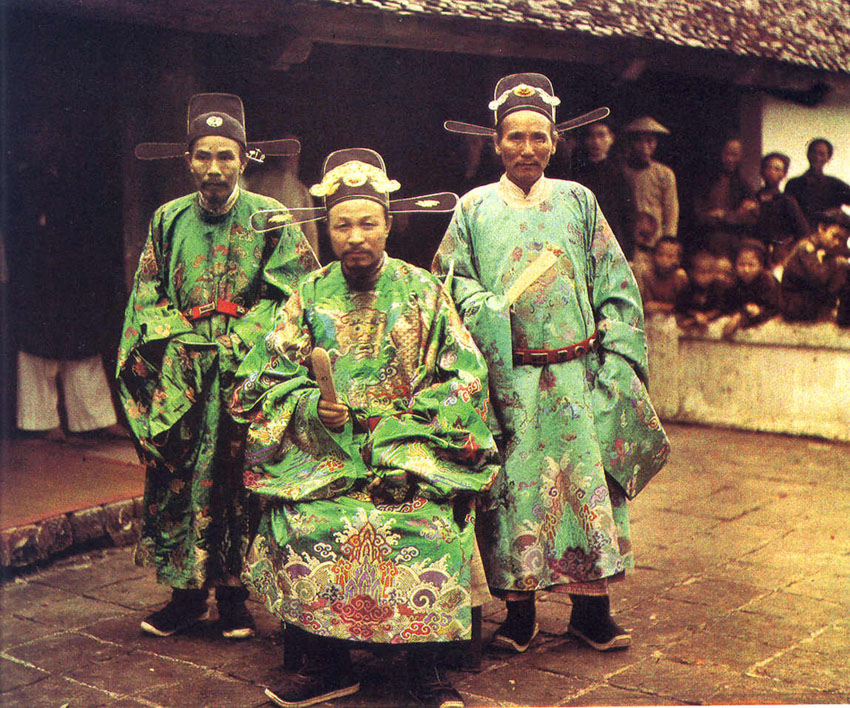
Here are a few more examples from the museum's collection. The photos and films on display at the museum seem almost other worldly because it is so strange to see things from that time in such bright color.

No comments:
Post a Comment